The short answer
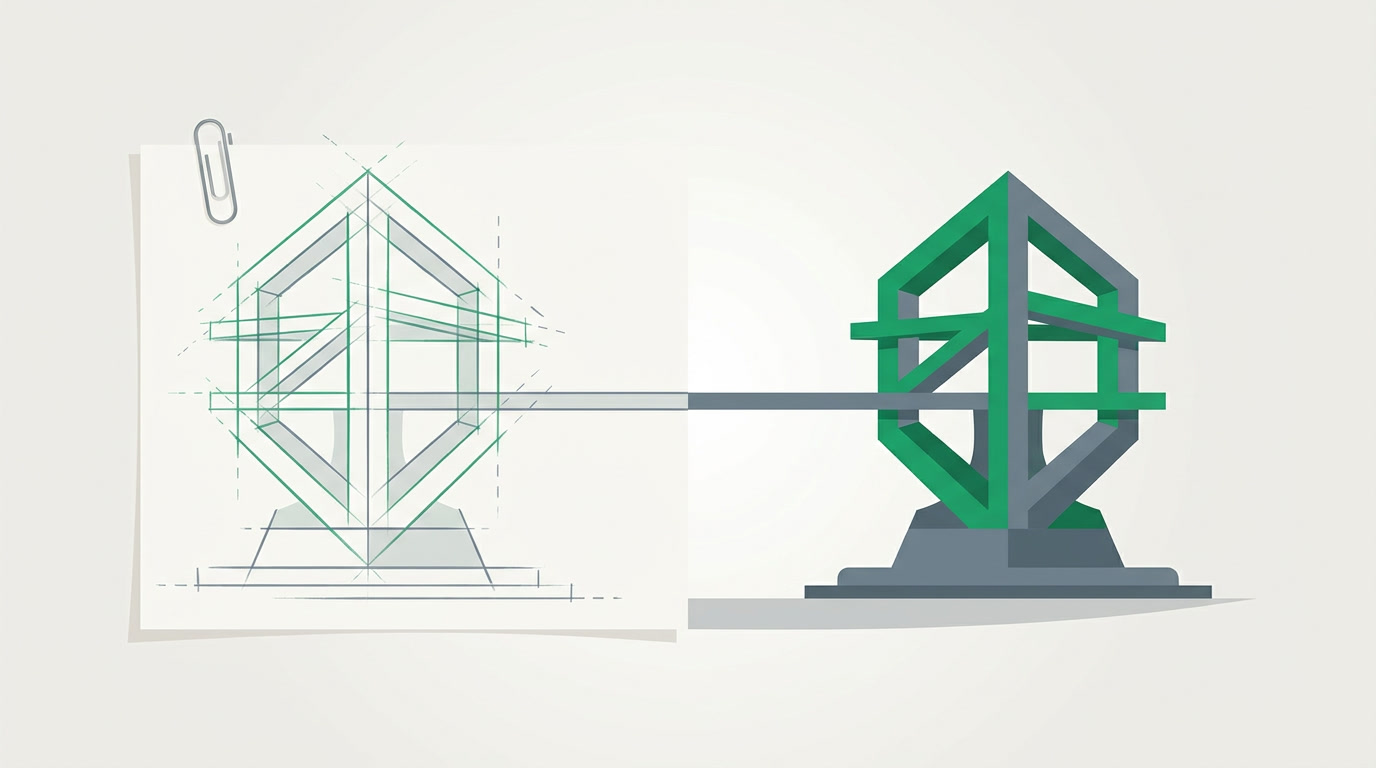
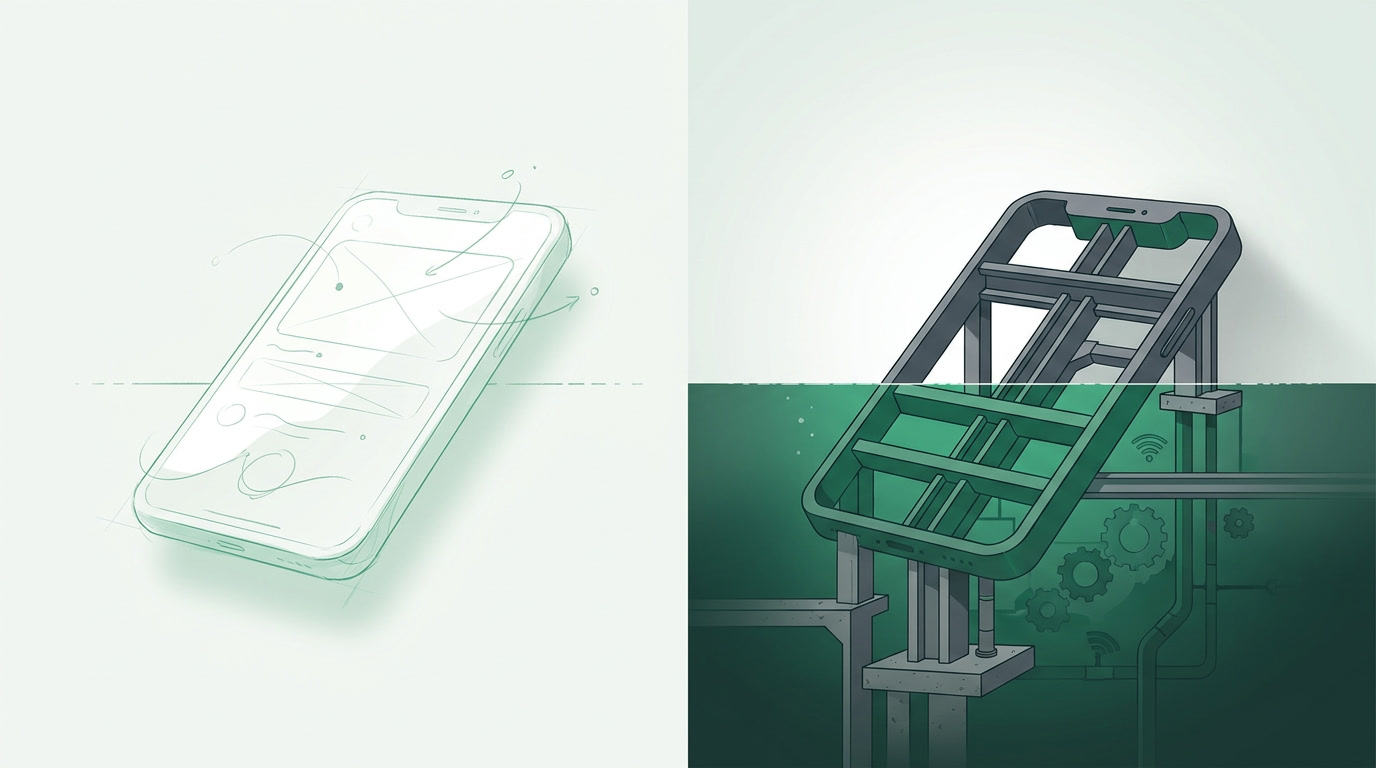
A prototype proves an idea; a production system carries a business. You have outgrown a vibe-coded app once real users, real money, permissions, and data you cannot lose are at stake. Production-grade means real auth, record-level permissions, backups, an audit trail, and a real ledger. ERPnBox gives you AI build-speed on top of that hardened foundation.
You built the thing in a weekend. A prompt, a few hours, a working app with a login screen and a database. It felt like magic — because it was. Tools like Replit, Lovable, Bolt and v0 turned an idea into a deployed URL faster than most people can write a spec.
Then people started using it. Real people, with real money moving through it. And the questions changed. Not "can I build this?" but "can I trust this with the business?" That is the moment a prototype has to grow up — or get replaced by something that already did.
When should a prototype become a real system?

The moment strangers depend on it. A prototype proves an idea; a system carries a business. The trigger is not lines of code — it is stakes. Once real users, real money, permissions, and data you cannot lose are on the line, you have outgrown the prototype, and the cost of a failure is no longer your afternoon.
To be fair to the tools: none of this means they are bad. Cursor accelerates real engineers on real codebases. Bubble has shipped production apps since 2012. Bolt gives developers full file control; Lovable gives non-developers the best-looking first draft. They are excellent at what they are for: prototypes and internal tools. The argument here is narrower — it is about the system you *run the company on*.
What are the signs you have outgrown a vibe-coded app?
You feel them before you can name them. Someone asks "who changed this record?" and there is no answer. A user sees another user's data. A month-end number does not reconcile. The app slows under load. Each is the same signal: the easy 70% is done, and the hard 30% has arrived — edge cases, error handling, security, and integration.
- Permissions matter now. "Can this user touch *this* record?" is the hard part, and AI scaffolds usually get it naively — a flag that says someone *may* edit, not that they may edit *this one*.
- You cannot afford to lose the data. No backups, no audit trail — one bad deploy and history is gone.
- Uptime is a promise now. "Works in the demo, breaks in prod" stops being funny when customers are waiting.
- Re-prompting scares you. Regeneration drift — a new prompt silently rewriting code that worked — means you now babysit the app instead of using it.
This is not folklore. Industry research is blunt: Veracode's 2025 analysis found roughly 45% of AI-generated code introduces an OWASP Top-10 vulnerability. Harness's 2025 delivery report found developers now spend *more* time debugging AI-written code and fixing its security holes than they save. A new job title even appeared in late 2025 — the "vibe-coding cleanup specialist."
What does "production-grade" actually mean?
It means the boring machinery that no demo shows. Real authentication. Record-level permissions — not just "can edit" but "can edit this one." Automatic backups and a restore you have tested. An audit trail of who changed what. Strict data isolation between customers. And, if money moves, a real double-entry ledger that actually balances.
| You have a prototype when… | You need production when… | |
|---|---|---|
| A handful of people you know use it | Strangers and customers log in daily | |
| Everyone can see everything | Roles must limit who sees which record | |
| Losing the data would be annoying | Losing the data would be a disaster | |
| No money runs through it | Invoices, payments, and a ledger that must balance | |
| "Who changed this?" doesn't come up | You need an audit trail for every change |
The honest limit of a generated codebase
AI scaffolds rarely ship tests, and data isolation between customers is usually under-built — the exact things that are invisible in a demo and catastrophic in production. That is the maintenance, security, and scale burden you quietly inherit the day real users arrive.
How do you move from proof-of-concept to platform without a year-long rebuild?
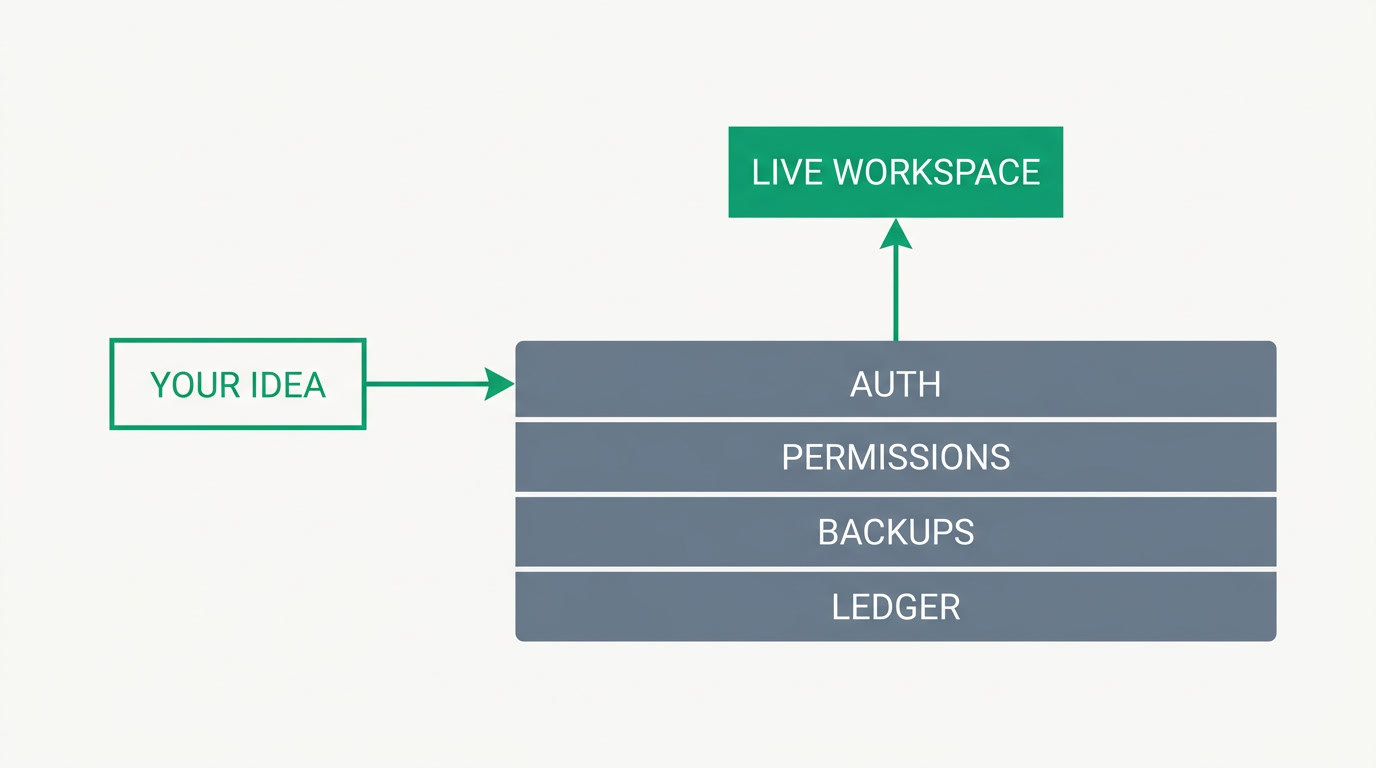
You stop rebuilding the plumbing and put your idea on plumbing that already works. The heavy enterprise route — a six-figure, year-long SAP or NetSuite project — is the old answer. The faster one: keep the AI speed you loved, but let it shape your workspace on top of a system where auth, permissions, backups, and the ledger are already engineered.
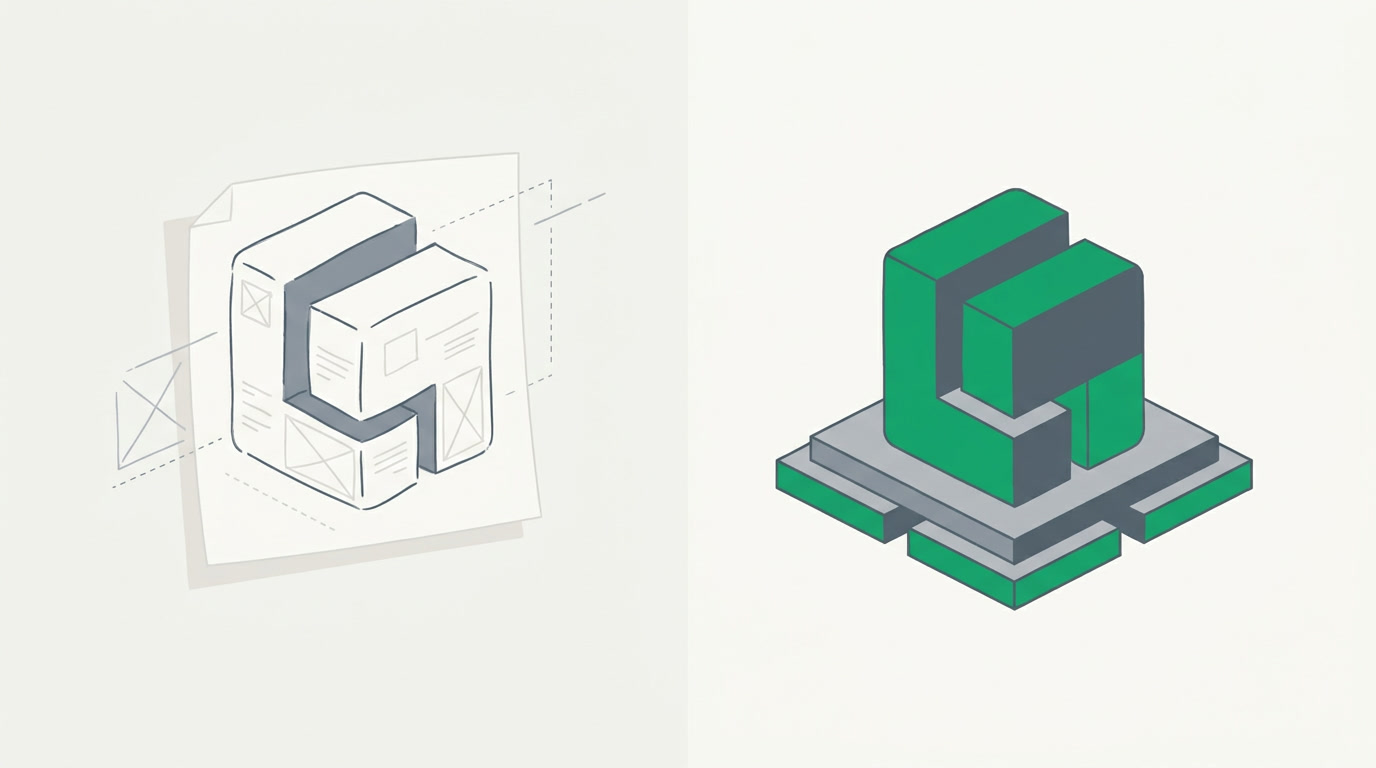
That is the deliberate difference with ERPnBox. Its conversational AI builds your modules, fields, and workflows in minutes — but on a hardened, maintained platform, not a fresh generated codebase you now own and must babysit. You get AI speed *without* inheriting the security, maintenance, and scale problems. Records stay connected across CRM, HR and payroll, a real double-entry Finance ledger, and twelve apps — one login, one per-seat price.
On the money side, be practical. Dedicated tools like Zoho Books and QuickBooks Online are excellent accounting products with broader bank-feed coverage than we have today — if pure accounting is all you need, use them. ERPnBox's Finance sits *inside* the same platform as your sales and people, so an invoice carries its deal and a payment posts to the ledger. It also offers live bank feeds via Stripe Financial Connections: connect your bank where Stripe supports it (US accounts today), or import a statement anywhere.
The demo asks "does it work?" Production asks "does it still work when it matters, for everyone, tomorrow?" Those are different questions, and only one of them keeps a business running.
Where do prototypes and platforms each belong?
Both, in their place. Keep vibe-coding for what it is superb at: proving an idea, a landing page, a scrappy internal tool, a pitch you can click. When that idea becomes the thing your team, your customers, and your cash depend on, move it onto a platform built for exactly that — so you spend your days *running the business*, not patching the software that runs it.
Skip the rebuild. Describe your business; watch it get built.
AI builds your workspace in minutes on a platform that already handles auth, permissions, backups, and a real ledger. 30-day free trial, no card.
Build your workspaceFrequently asked questions
Is a vibe-coded app safe to run my business on?
For a prototype or internal tool, it is often fine. For a system carrying real users, money, and data you cannot lose, be careful: industry research (Veracode, 2025) found roughly **45% of AI-generated code introduces a common vulnerability**, and record-level permissions and data isolation are usually under-built. Those are exactly the parts a demo never tests.
What is the difference between ERPnBox and a tool like Bolt or Lovable?
Bolt and Lovable generate a codebase *you* then own, maintain, and secure. ERPnBox's AI builds your **workspace** — modules, fields, workflows — on top of a maintained platform where auth, permissions, backups, and a double-entry ledger already exist. You get the AI speed without inheriting the maintenance and security burden.
Does ERPnBox replace SAP or NetSuite?
Not like-for-like. If you need deep supply-chain, warehouse, or procurement depth, those heavy enterprise suites do more. ERPnBox covers the business side — CRM, HR and payroll, a real double-entry ledger, and twelve connected apps — with AI setup in minutes instead of a year-long, six-figure implementation.
Can I move without a year-long rebuild?
Yes — that is the point. Instead of re-engineering the plumbing (auth, permissions, backups, ledger), you describe your business to ERPnBox's AI and it shapes the workspace on plumbing that already works. Records connect across apps from day one, on web and native mobile, in any language.
What about bank feeds — can it pull my transactions automatically?
Where Stripe supports it, yes. ERPnBox Finance offers live bank feeds via Stripe Financial Connections — you connect your bank inside Stripe's secure modal and transactions sync into the same matching and reconciliation pipeline. Today that covers US bank accounts; elsewhere, statement or CSV import remains the path.