The short answer
The best all-in-one business software depends on your priorities: Zoho One for breadth (~$37/user), Odoo for control if you're technical, and ERPnBox for a connected CRM, finance, HR, and support system built from a conversation in minutes, from $15/user. Judge each on connected records, real accounting, cost, and setup time.
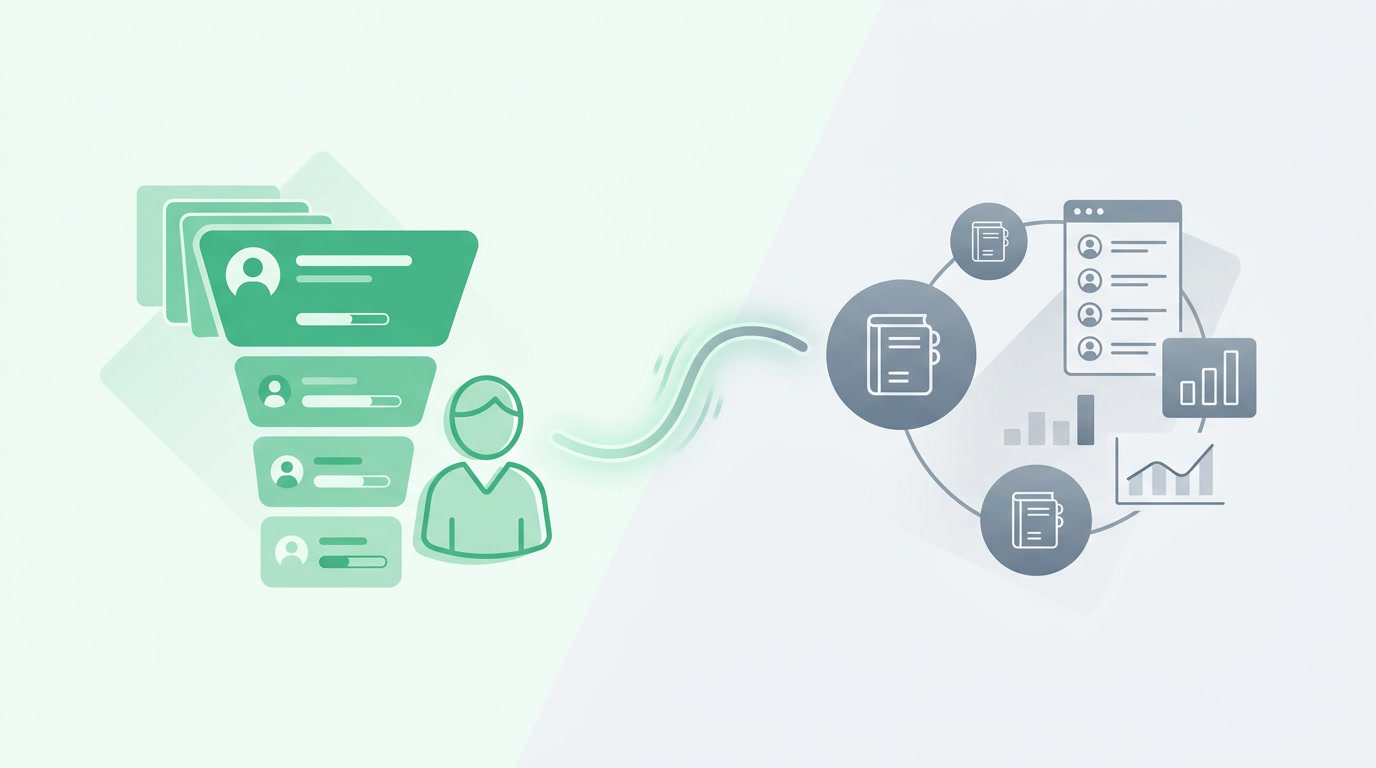
You started with one accounting tool, then bolted on a CRM, then a spreadsheet for HR, then a separate app for invoices. Each one works. None of them talk to each other. Now you spend your week copying a customer's name from the deal into the invoice, then into the support ticket, then into payroll when they become a client project. The tools weren't the problem. The gaps between them were.
All-in-one business software promises to close those gaps: one place where a lead becomes a deal, the deal becomes an invoice, the invoice hits a real ledger, and the whole trail stays connected. This guide is an honest look at what "all-in-one" actually means in 2026, when it beats stitching best-of-breed tools together, and how the main options — Zoho One, Odoo, and ERPnBox — compare for a small business.
What is all-in-one business software, and do you actually need it?
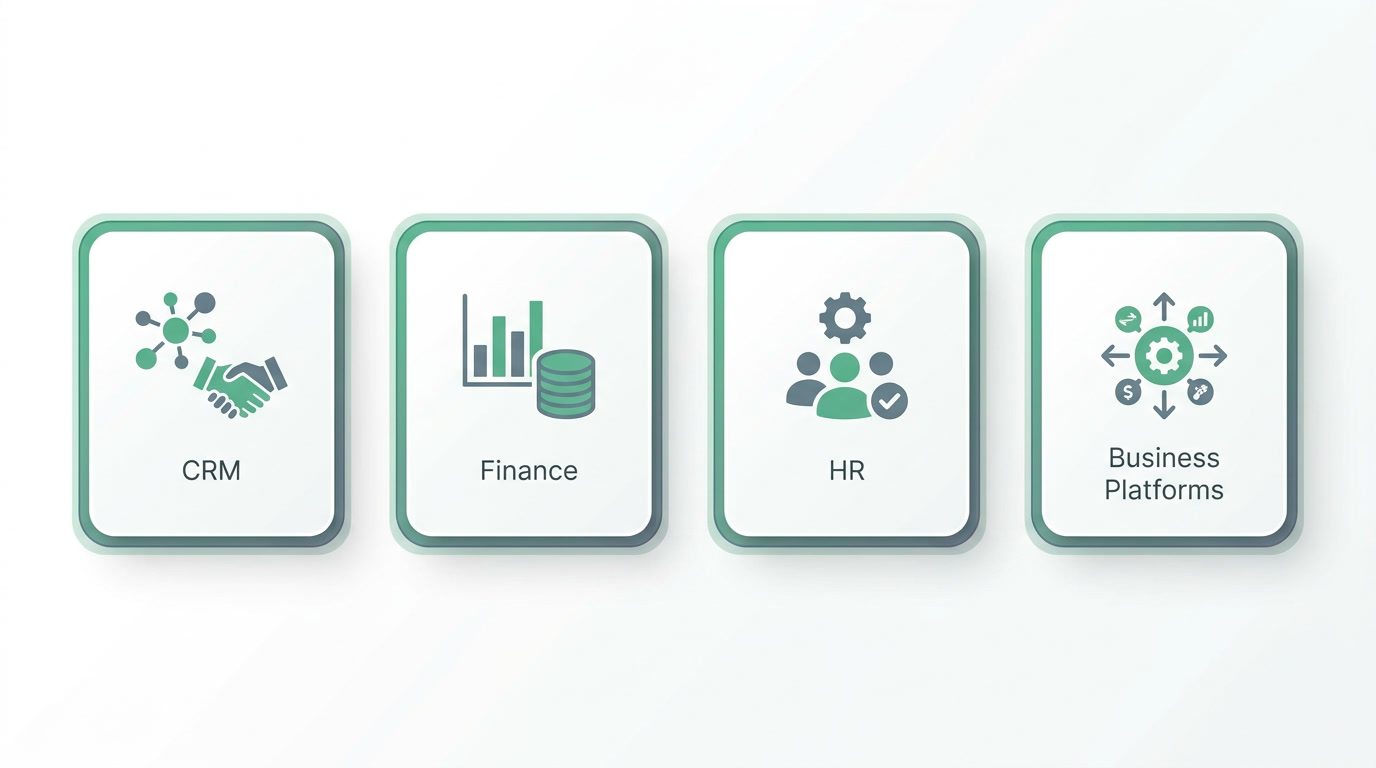
All-in-one business software runs your core operations — sales, customers, money, and people — from a single system where records stay connected. You need it when copying the same data between apps is eating hours, when nobody can answer "what is this customer worth across everything," or when a five-person team is paying for six subscriptions that don't share a login.
The honest counter-case: if one function dominates your business and the rest is trivial, a dedicated tool may serve you better. A studio that lives entirely inside its design pipeline, or a firm whose only real system is its accountant's ledger, may not need a full platform. All-in-one earns its keep when several functions matter at once and the handoffs between them are where work leaks.
All-in-one vs. stitching point tools together: what's the real trade-off?

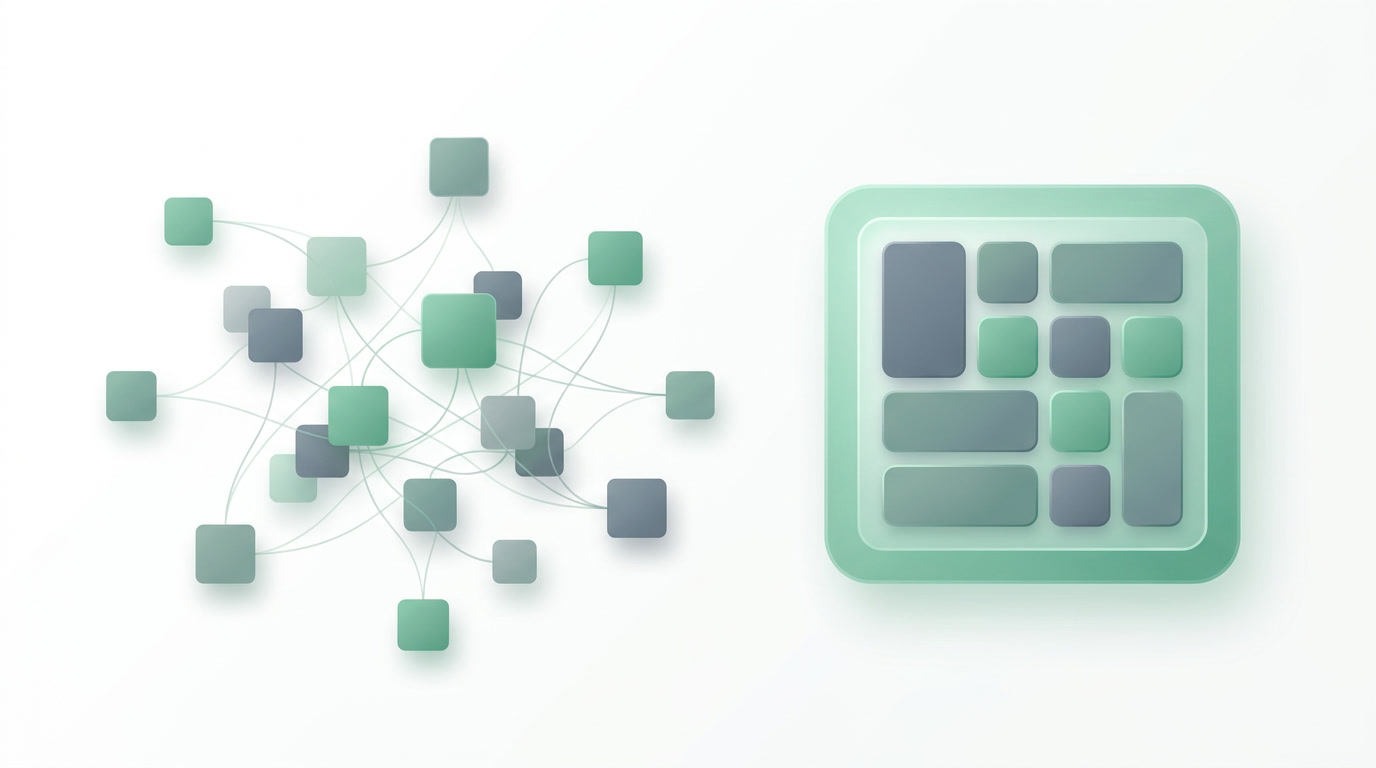
Stitched point tools give you the best individual app in each category but leave you owning the plumbing: integrations, duplicated data, and reconciliation. An all-in-one platform trades a little per-category depth for connected records and one bill. For most small businesses the connection is worth more than the extra depth they'd rarely use.
Where stitching hurts most is at the seams. Your CRM and your accounting tool each have their own idea of who a "customer" is. When they disagree, someone fixes it by hand. Every integration you add is another thing that can break during an update, and another vendor to chase when it does. That maintenance cost is invisible on the pricing page and very visible on a Tuesday afternoon.
| Approach | Best when | The cost you carry |
|---|---|---|
| Stitched point tools | One function dominates; you want maximum depth in it | Integrations, duplicate data, manual reconciliation, several bills |
| All-in-one platform | Several functions matter and handoffs between them leak work | Slightly less depth in any single category |
| Enterprise ERP (SAP, NetSuite) | Full supply chain, warehouses, complex procurement | Six-figure cost, long implementation, consultants |
How should you choose? Honest selection criteria
Judge an all-in-one on five things: whether records genuinely stay connected across apps (not just co-located), whether the accounting is a real double-entry ledger or a lightweight invoice log, total cost per user once everyone logs in, how long setup actually takes, and whether it fits how your specific business works without a consultant.
- Connected records — an invoice should carry its deal; a ticket should carry its customer. If you have to re-enter the same person in each app, it isn't really one system.
- Real accounting — ask whether it produces a proper profit-and-loss, balance sheet, and trial balance, not just a list of invoices.
- True per-user cost — count every seat and every app your team will actually open, not the headline starting price.
- Time to running — days you can absorb, quarters you usually can't. Setup is where all-in-one projects quietly die.
- Fit to your work — your pipeline, your fields, your process — configurable without hiring a specialist.
Zoho One vs. Odoo vs. ERPnBox: how do they compare?
Zoho One gives you 40+ mature apps for around $37/user that you wire together yourself. Odoo is open-source and deeply modular, strong for teams that want control and often self-host, but technical to run. ERPnBox is the AI-built kind: describe your business and it assembles a connected CRM, HR, payroll, finance, and support workspace in minutes, from $15/user.
None of these is the right answer for everyone. Zoho One's breadth is unmatched if you have the patience to configure it. Odoo rewards teams with technical depth and a preference for owning their stack. ERPnBox trades some of that configurability for speed to a working system and connected records out of the box. Here's the honest side-by-side.
| Zoho One | Odoo | ERPnBox | |
|---|---|---|---|
| Model | 40+ apps you connect | Open-source modules | AI builds a connected workspace |
| Setup | Configure each app | Often self-hosted, technical | Described in a sentence, built in minutes |
| Accounting | Full accounting app | Full accounting module | Real double-entry, 14 reports |
| Price (per user) | ~$37 | Varies by module/hosting | From $15 |
| Best for | Breadth, patient teams | Control, technical teams | Speed to a running system |
Where does an AI-built all-in-one fit?
An AI-built all-in-one fits the small business that needs a real system now and can't spare weeks configuring one or a budget for consultants. Instead of assembling apps yourself, you describe your business in plain language and the platform builds the workspace — pipelines, invoicing, employee records, payroll, a support desk, bookings — then runs it with records already connected.
This is what ERPnBox means by "the ERP without the implementation." The enterprise ERPs — SAP, NetSuite — are deep and genuinely run the world's largest supply chains, but they arrive with six-figure costs and year-long rollouts. ERPnBox is the deliberate opposite: describe your business in a sentence and minutes later there's a working system with a real ledger under the invoice. It owns the category from the other end.
Being honest about the edges matters. ERPnBox is not a like-for-like replacement for a full enterprise ERP: it doesn't run full supply-chain, warehouse, or complex procurement operations. If your business turns on multi-warehouse logistics, you want a heavier suite. If it turns on sales, customers, money, and people staying connected — which describes most small businesses — the AI-built path gets you there in a fraction of the time.
It works on web and native mobile, in any language, with a 30-day free trial and no card required. Real estate, recruitment, education, and healthcare each get a starting template, but the system shapes itself to whatever you describe — you aren't forced into someone else's idea of your process.
See your business as a working system
Describe what you do in a sentence and watch ERPnBox build a connected workspace — CRM, finance, HR, and more — with a real ledger under every invoice.
Start your free trialMaking the call
Start from your bottleneck, not the feature list. If your pain is a single function done deeply, a dedicated tool is fine. If your pain is the space between functions — the re-typing, the mismatched customer records, the six logins — an all-in-one is the fix, and the question becomes how much time you're willing to spend building it. Zoho One if you want breadth and have patience; Odoo if you want control and have technical hands; ERPnBox if you want a running system built from a conversation this week.
Frequently asked questions
What is the best all-in-one business software for a small business in 2026?
There's no single winner — **it depends on what you value**. Zoho One offers the most breadth (40+ apps, ~$37/user) if you'll configure it. Odoo suits technical teams that want control. ERPnBox suits businesses that want a connected CRM, finance, HR, and support system built from a conversation in minutes, from $15/user. Judge each on **connected records, real accounting, true per-user cost, and time to running**.
Is an all-in-one platform or separate best-of-breed tools better?
Separate tools give more depth in each category but **leave you owning integrations, duplicate data, and reconciliation**. An all-in-one trades a little depth for connected records and one bill. If several functions matter at once and the handoffs between them leak work, all-in-one usually wins. If one function dominates and the rest is trivial, a dedicated tool may serve you better.
Does ERPnBox include real accounting or just invoicing?
**Real accounting.** ERPnBox has a genuine [double-entry ledger](/finance) with a chart of accounts (26 subtypes), invoices, estimates, credit notes, payments and receivables, expenses, cost centers, multi-currency with FX, bank CSV import and reconciliation, and **14 reports including profit-and-loss, balance sheet, trial balance, and cash flow**. The invoice you send has a proper ledger entry underneath it.
Is ERPnBox a replacement for SAP or NetSuite?
**No, and it doesn't try to be.** Enterprise ERPs like SAP and NetSuite run full supply chains, warehouses, and complex procurement — ERPnBox does not. ERPnBox is the opposite kind of ERP: the AI-built, all-in-one system for small businesses that needs no six-figure budget or year-long rollout. If your business turns on multi-warehouse logistics, choose a heavier suite. If it turns on sales, customers, money, and people staying connected, ERPnBox fits.
How long does it take to set up an all-in-one system with ERPnBox?
**Minutes to a working starting point.** You describe your business in plain language and the conversational AI builds the workspace — pipelines, invoicing, employee records, payroll, support desk, bookings, campaigns, [forms](/apps/forms), even a published website — then runs it with records connected across every app. You refine from there. There's a **30-day free trial with no card required**.