The short answer
Zoho One is a mature suite of 40+ apps at ~$37 per user that you wire together yourself. ERPnBox is 12 apps already unified as one system: one login, $15–20 per user, an AI that builds your workspace from a conversation, real double-entry accounting included, and it works in any language.
Zoho One is a mature suite of 40+ apps at around $37 per user — powerful if you're willing to wire the apps together yourself. ERPnBox is 12 apps that are already one system: one login, one lower price ($15–20 per user), an AI that builds your workspace from a conversation, and real double-entry finance included. It works in any language.
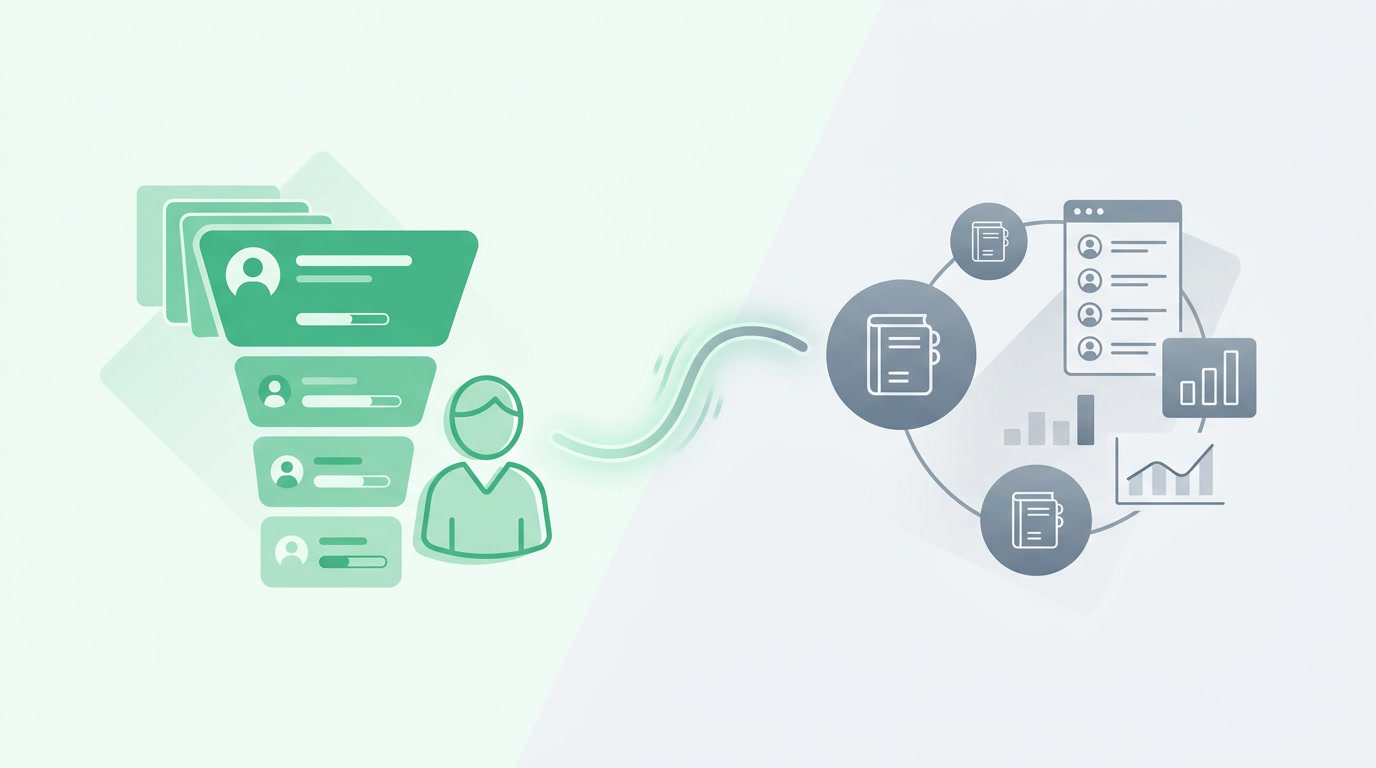
Both promise the same thing: run your whole business in one place instead of a drawer full of disconnected tools. Zoho One has been doing it for years and does it well. ERPnBox takes a different route to the same outcome — fewer apps, but already joined into one system, set up by an AI you talk to rather than a project you assemble.
This comparison is fair. It lays out where Zoho One is strong, where ERPnBox is different, a side-by-side table, and how to decide — so you can pick the one that matches how your team actually works.
What is Zoho One, and what makes it strong?

Zoho One is a subscription that bundles 40+ Zoho applications — CRM, books, projects, HR, marketing, help desk and more — for roughly $37 per user. Its strength is breadth and maturity: a huge catalog, years of refinement, and a deep ecosystem of integrations and add-ons. For teams that want a specific tool for nearly every job, few suites match its coverage.
The trade-off is assembly. Those 40+ apps are separate products under one bill. Getting them to behave as a single system — shared data, consistent records, one way of working — is a project you own: connecting modules, mapping fields, and maintaining the setup as you grow. That flexibility is exactly what larger or more technical teams value.
How is ERPnBox different from Zoho One?
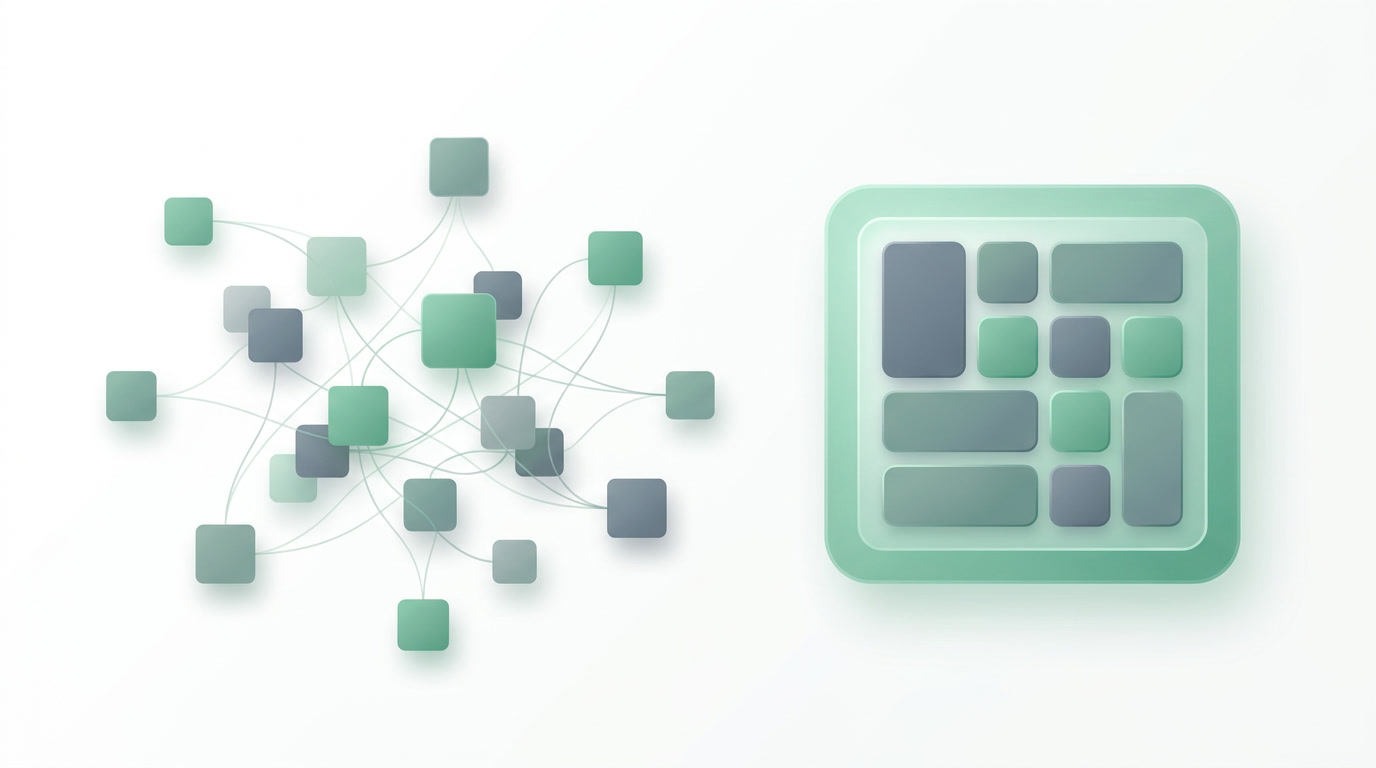
ERPnBox is 12 apps that ship as one system rather than a catalog you connect. CRM, HR and Payroll, and Finance with real double-entry accounting share one data model, one login, and one per-seat price ($15–20). You describe your business in plain language and an AI builds the workspace — pipelines, invoicing, employee records, a support desk, bookings — then runs it, with records staying connected across every app.
Three differences stand out. Price: one seat covers everything, at roughly half Zoho One's per-user cost. Setup: instead of assembling and wiring apps, you have a conversation and minutes later there's a working system — with a real ledger sitting under every invoice. Connection: a won deal becomes an invoice, a ticket carries its customer, a lead auto-routes, because it's all one system, not integrated products.
ERPnBox vs Zoho One: the two-column comparison
Here is the honest side-by-side. Zoho One wins on sheer app count and ecosystem depth; ERPnBox wins on price, one-system unity, AI-built setup, and finance included. Read it against your own priorities — more tools to pick from, or fewer tools already working together.
| Dimension | Zoho One | ERPnBox |
|---|---|---|
| Number of apps | 40+ applications | 12 apps, already unified |
| Price per user | ~$37 | $15 (Professional) – $20 (Growth) |
| How it's set up | You wire the apps together | AI builds it from a conversation |
| Data across apps | Separate apps you integrate | One shared data model |
| Accounting | Zoho Books (dedicated app) | Real double-entry, included |
| Languages | Broad language support | Works in any language |
| Free trial | Trial available | 30 days, no card |
| Best for | Teams wanting maximum app choice | Teams wanting one system, fast, cheaper |
Why is ERPnBox cheaper for one login?
Because it's one product, not a bundle. Every ERPnBox seat — $15 on Professional, $20 on Growth — includes all 12 apps, so there are no per-app tiers to add up and no cost that climbs as you switch on more of the system. Yearly billing gives you two months free, and the 30-day trial needs no card.
At scale the gap is plain: for a ten-person team, one platform at $15–20 a seat versus roughly $37 is a different monthly number for a comparable outcome — running sales, people and money in one place. The right question isn't only price, though; it's whether 12 unified apps cover what you need, or you truly want the wider Zoho catalog.
Does ERPnBox really include full accounting?
Yes — a real double-entry ledger, not an invoice list. Finance covers a chart of accounts with 26 subtypes, invoices, estimates and credit notes, payments and receivables, expenses and bills, cost centers, multi-currency with FX, bank statement import and reconciliation by CSV, VAT and withholding tax, and 14 reports including P&L, balance sheet, trial balance and cash flow.
To be fair about the edges: ERPnBox does not file statutory tax returns, does not send e-invoices to a government portal, and imports bank statements by CSV rather than through live bank feeds. It also isn't a full supply-chain, warehouse or procurement suite — if that's your core need, an enterprise ERP fits better. Zoho Books is likewise a capable, dedicated accounting app; the ERPnBox difference is that the ledger already sits under the same records as your sales and your team.
Describe your business. Get a working system.
See how ERPnBox builds CRM, HR and Finance into one platform from a single conversation.
Compare plansWhich should you choose — Zoho One or ERPnBox?
Choose Zoho One if you want the widest possible catalog and have the appetite to wire apps together your way — its 40+ apps and mature ecosystem reward teams that value breadth and control. Choose ERPnBox if you'd rather have fewer apps already working as one system, set up by AI, at a lower per-seat price, with real accounting included and no integration work.
A simple test: if your team's day is spent choosing and connecting specialized tools, Zoho One's range fits. If your day is spent running sales, people and money and you want them joined from the start, ERPnBox is built for that — describe it in a sentence, and minutes later it's a working system with a real ledger under the invoice.
Frequently asked questions
Is ERPnBox a real Zoho One alternative?
Yes, for teams that want an **all-in-one system rather than a large catalog to assemble**. ERPnBox covers [CRM](/crm), [HR and Payroll](/hrms), and real double-entry [Finance](/finance) across 12 apps that already share one data model, at $15–20 per user versus Zoho One's ~$37. If you need 40+ specialized apps, Zoho One's breadth may suit you better.
How much cheaper is ERPnBox than Zoho One?
ERPnBox is **$15 per user on Professional and $20 on Growth**, against roughly $37 per user for Zoho One — close to half, with all 12 apps included in every seat. Yearly billing adds two months free, and the 30-day trial needs no card.
Does ERPnBox include accounting like Zoho Books?
ERPnBox includes a **real double-entry ledger** with a chart of accounts, invoices, payments, expenses, multi-currency, VAT and withholding tax, and 14 reports including P&L and balance sheet. It doesn't file statutory returns, send government e-invoices, or use live bank feeds — you import statements by CSV.
What does 'AI builds it from a conversation' actually mean?
You describe your business in plain language and ERPnBox **configures the workspace for you** — pipelines, invoicing, employee records, a support desk, bookings, forms, even a published website — then runs it. Instead of choosing and connecting apps yourself, minutes later you have **a working system with records already linked across every app**.
Does ERPnBox work in languages other than English?
Yes. ERPnBox **works in any language**, so your team runs it in the language they actually use, on web and native [mobile](/mobile) for iOS and Android. Zoho One also offers broad language support; the practical difference is that in ERPnBox one language runs the whole unified system rather than a set of separately localized apps.
Is ERPnBox a full ERP replacement for NetSuite or SAP?
No, and we say so plainly. ERPnBox is the **AI-built, all-in-one ERP for small business** — without the six-figure cost and year-long rollout. It doesn't do full supply-chain, warehouse or procurement. If you need deep manufacturing or logistics, an enterprise ERP like [NetSuite](https://www.netsuite.com/) or [SAP](https://www.sap.com/) fits; if you want your whole business in one place fast, ERPnBox is built for that.