
The short answer
The best CRM for real estate handles five things in one connected system: a lead pool with quotas, property and unit tracking, WhatsApp follow-up, installment payment plans, and automatic agent assignment. ERPnBox builds all five from a conversation — with a real ledger under the payment plans — for $15–$20 per user.
Real estate runs on speed and memory. The lead who asked about a two-bedroom unit on Monday has already called three other agencies by Wednesday. Whoever answers first, remembers the budget, and follows up on the right channel wins the deal. A CRM built for property teams is what makes that possible at scale — across dozens of agents, hundreds of units, and thousands of leads.
But "best CRM for real estate" doesn't mean the same thing for a five-agent boutique brokerage as it does for a developer selling off-plan units on payment plans. This guide breaks down what property teams actually need, how the leading options compare, and where each one fits — honestly, including where they don't.
What should a real estate CRM actually do?
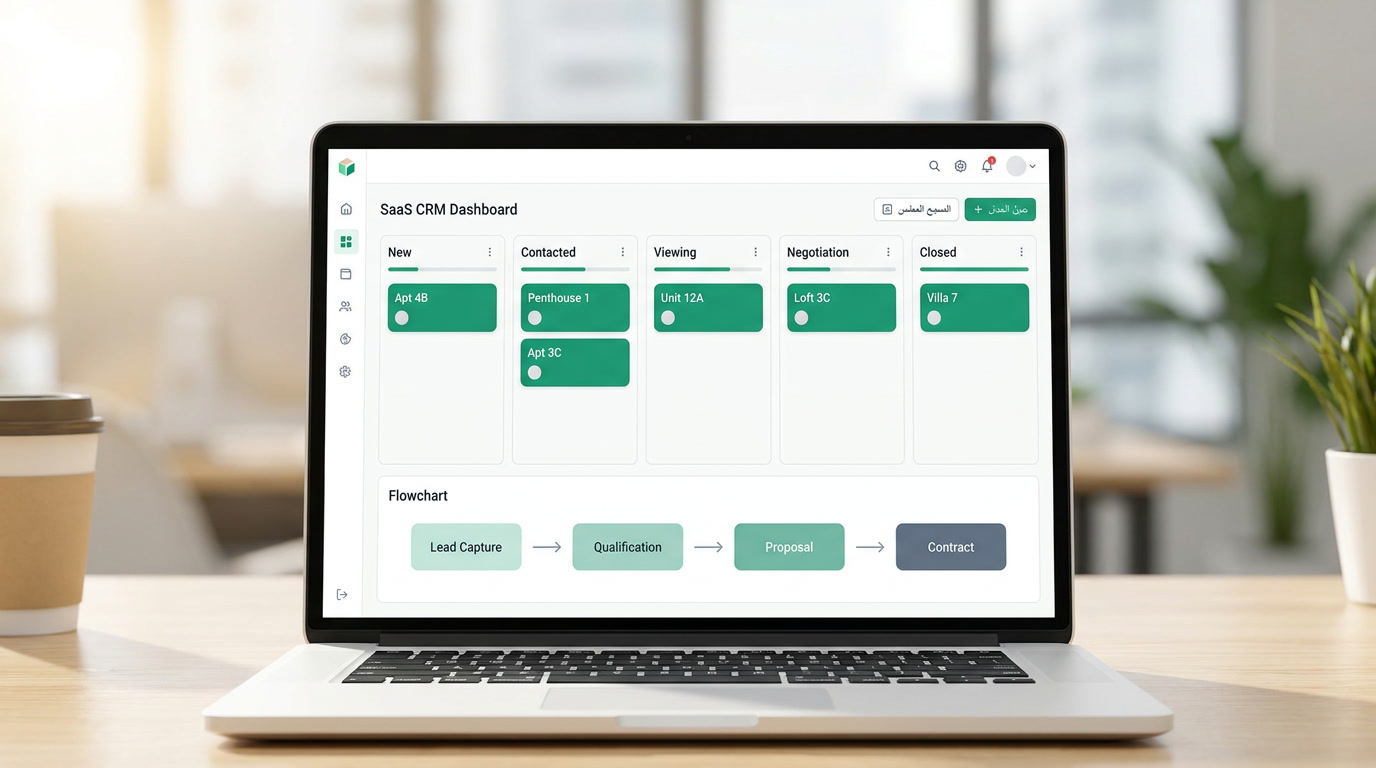
A real estate CRM should capture leads from every source into one pool, route them to agents automatically, track properties and units alongside the buyers interested in them, follow up on the channels clients actually use, and handle installment payment plans through to close. If any of those lives in a separate spreadsheet, deals leak.
Real estate has needs that a generic sales CRM ignores. You aren't tracking one deal per contact — you're matching many buyers against a moving inventory of units, each with a status, price, and floor. You aren't closing in one payment — you're managing installment schedules that run for months or years. And most of your follow-up happens on messaging apps, not email. The right tool treats these as first-class, not workarounds.
| What property teams need | Why it matters | Look for |
|---|---|---|
| Lead pool with quotas | Distribute fresh leads fairly so no agent hoards and none go cold | Shared pool, daily pull limits per agent |
| Property / unit tracking | Match buyers to available inventory by price, size, status | Custom fields, linked records, status views |
| Messaging follow-up | Clients reply on WhatsApp, not email — meet them there | Built-in WhatsApp, live chat, from the record |
| Installment / payment plans | Off-plan and resale sales close over a schedule, not one payment | Payment plans tied to the deal and a real ledger |
| Automatic agent assignment | First response speed decides who wins the lead | Assignment rules, round-robin, SLA timers |
How do the top real estate CRM options compare?
There's no single best CRM for every agency. Salesforce and HubSpot are excellent sales engines but pricey and light on property-specific workflows. Zoho and Odoo are broad and affordable but you assemble them yourself. Dedicated real estate CRMs handle listings well but rarely touch your accounting. The right pick depends on team size, how you sell, and whether you want one system or several stitched together.
| Option | Strength | Trade-off for property teams |
|---|---|---|
| Salesforce | The most capable, customizable CRM there is | Expensive and complex; property, payments, accounting are add-ons or integrations |
| HubSpot | Strong marketing and CRM, easy start, free tier | Gets pricey to scale; no unit inventory or installment logic |
| Zoho One | 40+ apps, mature, ~$37/user | You wire the apps together yourself; setup effort is real |
| Odoo | Open-source, modular, strong for control | Technical, often self-hosted; needs someone to run it |
| QuickBooks / Xero | Excellent dedicated accounting | Separate from your CRM — payments and deals live apart |
| ERPnBox | CRM + real accounting + 10 more apps, one login, AI-built | Not a full supply-chain / warehouse suite — built for selling and running, not distribution |
Why does ERPnBox fit real estate teams?
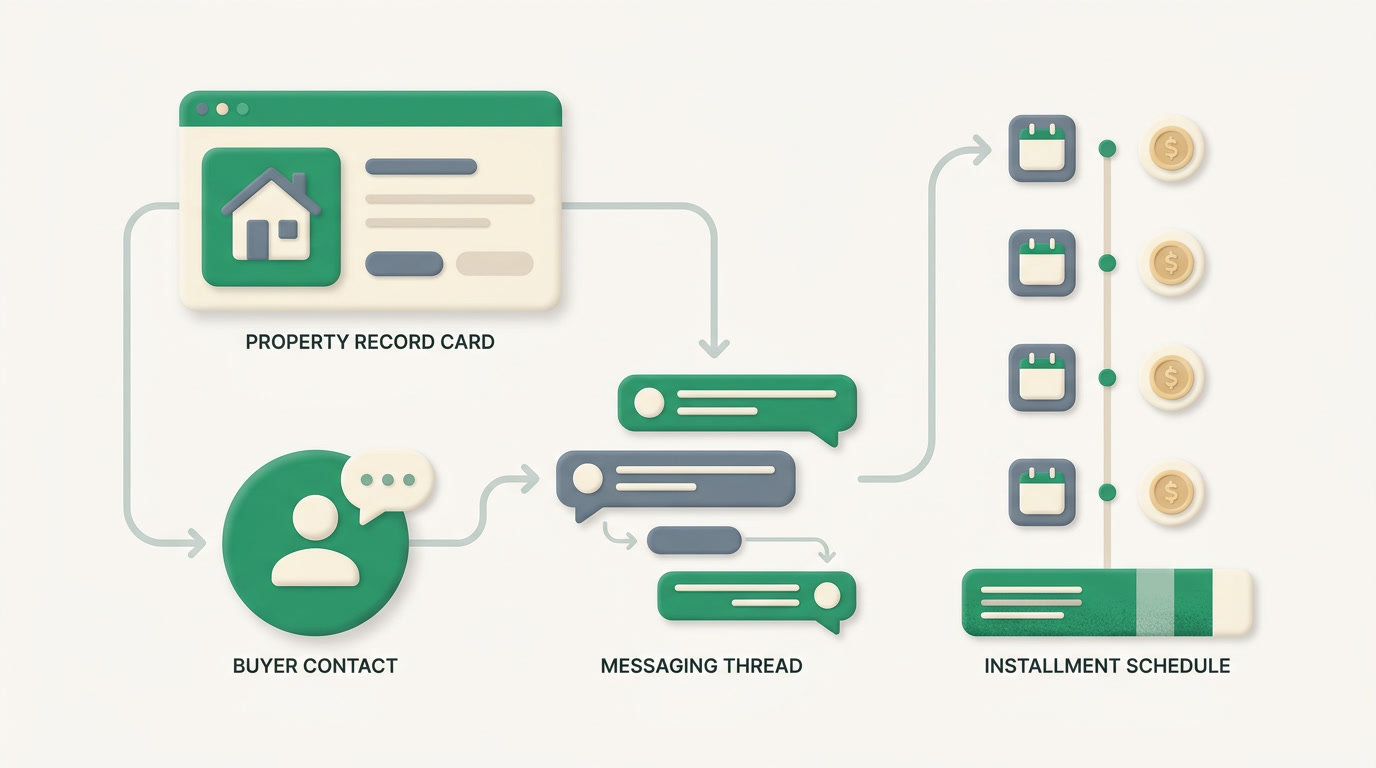
ERPnBox fits because the five things property teams need most are built in and connected: a lead pool with daily pull quotas, custom records for properties and units, WhatsApp follow-up from inside the record, payment plans that sit on a real double-entry ledger, and assignment rules that route every new lead to an agent instantly. One login, one price, no integrations to maintain.
What makes it different is where it comes from. You describe your agency in plain language — how you get leads, the unit types you sell, your installment terms — and minutes later you have a working system: a pipeline, property records, a WhatsApp channel, and invoices with a real ledger underneath them. That's the ERP idea without the six-figure rollout and the year of consultants. Your Business, Unboxed.
- Lead pool with quotas — a shared pool where agents pull a capped number of fresh leads per day, so nobody hoards and none go stale.
- Lead capture everywhere — from Meta Lead Ads, web forms, and WhatsApp straight into the pipeline, with duplicate detection so the same buyer doesn't get worked twice.
- WhatsApp, email, and live chat built in — follow up on the channel the client actually answers, without leaving the record.
- Payment plans on a real ledger — installment schedules tied to the deal, with receivables, receipts, and reports underneath, not a spreadsheet.
- Assignment rules and SLA timers — route each new lead to the right agent instantly and flag the ones going unanswered.
- Web and native mobile, in any language — your agents work from the field in the language they speak.
See the CRM built for teams that sell
Describe your agency in a sentence and watch it become a working system — pipeline, WhatsApp, payment plans, and a real ledger. 30-day free trial, no card.
Explore the CRMWhen is a dedicated tool the smarter choice?
Be honest about scale. If you're a large developer needing full construction supply-chain, procurement, and warehouse management, an enterprise ERP like SAP or NetSuite covers that depth — at a six-figure cost and a long rollout. ERPnBox is deliberately the opposite: built to sell and run a business, not to manage a distribution chain.
Likewise, if all you need is a listings portal or an MLS sync, a niche real estate tool may serve that one job better. Where ERPnBox wins is the common case: an agency that wants leads, follow-up, agent management, installment payments, and its books in one place — set up from a conversation, not a project plan. And because records stay connected, a payment recorded against a unit shows up in the deal, the customer's history, and the financial reports at once.
Frequently asked questions
What is the best CRM for real estate?
The best real estate CRM handles **lead pools, property and unit tracking, WhatsApp follow-up, installment payment plans, and automatic agent assignment** in one connected system. Salesforce and HubSpot are strong sales engines; ERPnBox adds property records, messaging, and a real ledger for payment plans, set up from a conversation for $15–$20 per user.
Does ERPnBox support installment and payment plans for property sales?
Yes. Payment plans let you set installment schedules tied to a deal, and they run on a [real double-entry ledger](/finance) — so receivables, receipts, and financial reports **update automatically**. That's the difference from tracking installments in a spreadsheet: the money and the deal stay in sync.
Can agents follow up with leads over WhatsApp?
Yes. WhatsApp, email, and live chat are **built in**, so agents follow up on the channel clients actually answer without leaving the lead record. Leads can also come in from WhatsApp, Meta Lead Ads, and web forms directly into the pipeline.
How does the lead pool with quotas work?
New leads land in a shared pool, and each agent can pull a **capped number per day**. This keeps distribution fair — no agent hoards the best leads and none sit untouched. Combined with assignment rules, you can also auto-route specific leads to specific agents or teams.
Is ERPnBox a replacement for enterprise ERP like SAP or NetSuite?
No, and it isn't trying to be. ERPnBox doesn't do full supply-chain, warehouse, or procurement. It's **built to sell and run a business** — CRM, finance, HR, and 12 apps in one login, set up from a conversation instead of a year-long implementation. For pure distribution depth, enterprise ERP still fits.
How quickly can a real estate agency get set up?
**Minutes**. You describe your agency — your lead sources, unit types, and installment terms — and the AI builds the workspace: pipeline, property records, WhatsApp, and invoicing with a real ledger. There's a **30-day free trial with no card required**, so you can test it with real leads first.