The short answer
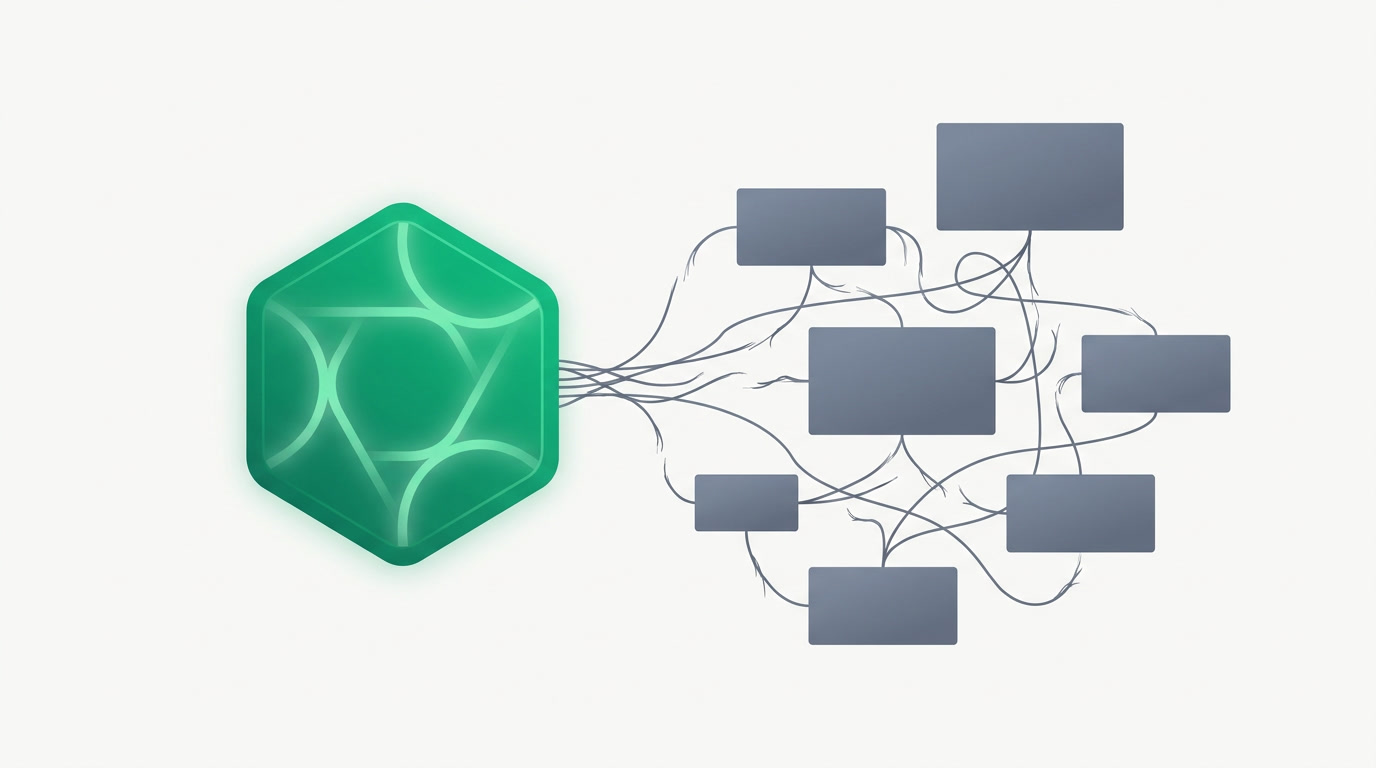
Best-of-breed means buying the deepest tool in each category and connecting them; you get more depth but pay an integration tax, live with data silos and re-entry, and nobody owns the whole picture. All-in-one means one connected suite at one per-seat price — less depth per app, but records stay joined. Choose by which pain hurts more.
Every growing company reaches the same fork. You can buy the best tool in each category — the sharpest CRM, the deepest accounting, the most complete HR — and wire them together. Or you can run one suite that does all of it under a single login. Both are legitimate. The wrong one just costs you quietly, month after month.
This is a decision guide, not a sales pitch. We'll be fair to best-of-breed — because it's often the right call — then show you the bill that comes with it, and when a connected suite like ERPnBox wins instead.
What do all-in-one and best-of-breed actually mean?

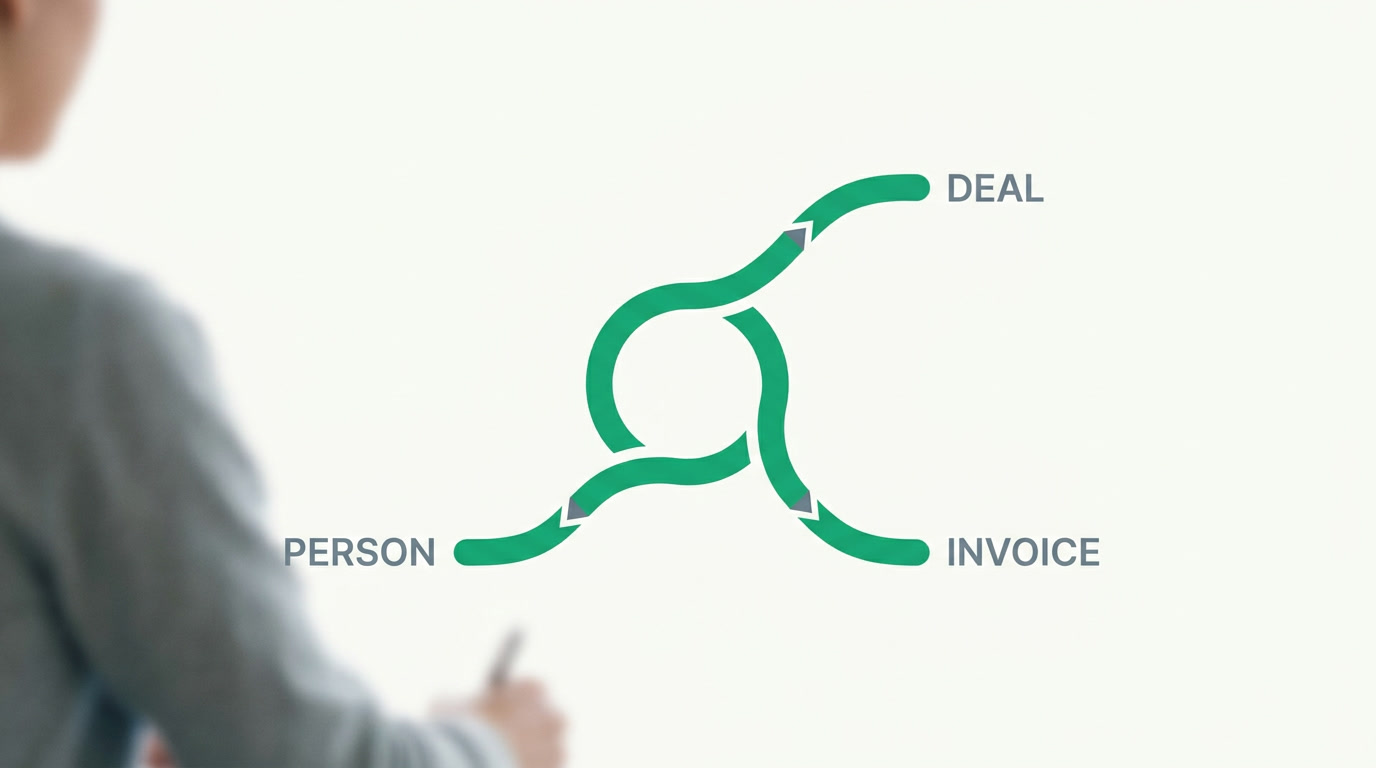
Best-of-breed means you pick the category leader for each job — say HubSpot for sales, QuickBooks Online for the books, a dedicated HR tool for people — and connect them. All-in-one means one platform runs CRM, finance, and HR together, so a deal, its invoice, and the person who owns it are the same connected record, not three copies in three systems.
Why do teams choose best-of-breed — and where is it genuinely better?
Best-of-breed wins on depth. A tool that does one job has spent every release making that job better. Zoho Books and QuickBooks are excellent, dedicated accounting with broader automatic bank-feed coverage than most suites. Salesforce and HubSpot go deeper on sales automation than any bundled CRM. If one function is your whole business, buy the specialist.
- You pick winners. No compromise per category — the sharpest tool for each job.
- Deeper features. Specialists ship edge-case functionality a generalist rarely reaches.
- Swap one without the rest. Outgrow your CRM? Replace it alone, in theory.
- Mature ecosystems. Accountant networks, app marketplaces, years of documentation.
What does best-of-breed actually cost you?
The tools are only the sticker price. The real bill is what it takes to make separate systems behave like one. Four costs show up on every stack, and they compound as you grow: the integration tax, data silos, re-entry, and fragmented pricing. None of them appears on an invoice, which is exactly why they're easy to underrate.
- Integration tax. Connectors between tools break on updates, need maintaining, and someone has to own them. When sales and finance don't agree on a number, you learn it from an angry customer.
- Data silos. The customer in your CRM and the customer in your books are two records that don't know about each other. Reporting across them means exports and a spreadsheet.
- Re-entry. The same person, deal, or invoice gets typed into two or three systems. Every manual copy is a chance for the numbers to drift apart.
- Fragmented pricing. Four vendors, four bills, four renewal dates, four price hikes. Per-seat costs quietly stack — legacy per-user CRMs alone run $500–2,000+/mo for a team of 10–20.
The quiet failure mode
With a best-of-breed stack, nobody owns the whole picture. Sales trusts the CRM, finance trusts the ledger, ops trusts a spreadsheet — and when they disagree, resolving it is a person's afternoon, not a click. That afternoon happens every week.
How does an all-in-one suite change the math?
An all-in-one suite trades a little depth per app for one connected record model and one bill. In ERPnBox, an invoice carries its deal, a payment posts to a real double-entry ledger, and the person who owns the account is the same person your HR app pays. No connector, no export, no reconciliation between your own systems. Records stay connected because they were never separated.
Be clear about the honest limit. On pure accounting depth, Zoho Books and QuickBooks are stronger today — they have broader automatic bank-feed coverage across more countries. ERPnBox Finance offers a genuine ledger, invoicing, expenses, reconciliation, multi-currency, and live bank feeds via Stripe Financial Connections — but that connects US bank accounts today; elsewhere you import a statement. Our difference isn't "better accounting." It's that the ledger lives inside the same platform as your CRM, HR, and a dozen apps at one per-seat price.
All-in-one vs best-of-breed: the decision table
| What you're weighing | Best-of-breed stack | All-in-one suite |
|---|---|---|
| Depth per function | Deepest — category specialists | Broad and sufficient, rarely deepest |
| Records across apps | Separate; joined by integrations | One connected record model |
| Re-entry & silos | Ongoing; grows with tools | Largely eliminated |
| Pricing | Multiple bills & renewals | One per-seat price |
| Who owns the whole picture | Nobody — each team trusts its tool | One platform of record |
| Maintenance burden | You maintain the connections | Vendor maintains the platform |
| Adoption | Several UIs & logins to learn | One login, one interface |
So which should you choose?
Choose by the pain that actually hurts you. If one function is your entire competitive edge and you have someone to own integrations, best-of-breed's depth is worth the tax. If your team is small, growing, and losing hours to re-entry and disagreeing systems, a connected suite wins — because for most operators, the cost of disconnected tools is bigger than the gap in any single feature.
- Choose best-of-breed if: one function is existential; you have technical ownership for integrations; a specialist's edge features are non-negotiable; you only need accounting (buy the dedicated tool).
- Choose all-in-one if: you want one connected picture; re-entry and silos are draining hours; you'd rather pay one per-seat price; adoption matters and your team wants one place to work.
The best-of-breed argument is about the tool. The all-in-one argument is about the business. Most small companies are losing more to the seams between their software than to any missing feature inside it.
See what one connected suite feels like
CRM, HR, real double-entry finance, and a dozen apps — one login, one per-seat price. 30-day free trial, no card.
Explore the platformFrequently asked questions
Is all-in-one always cheaper than best-of-breed?
Not automatically, but usually. One per-seat price replaces several subscriptions, renewals, and price hikes — ERPnBox is **$15/user** (Professional) or **$20/user** (Growth) for the whole suite as of mid-2026. The bigger saving is hidden: the hours you stop spending on integrations, re-entry, and reconciling your own systems against each other.
Won't a suite be worse at each individual job?
Often a little, and we won't pretend otherwise. On pure accounting depth, [Zoho Books](https://www.zoho.com/books) and [QuickBooks Online](https://quickbooks.intuit.com) have broader bank-feed coverage than us today. The trade is depth for connection: a suite's records stay joined, so you win on the workflow across apps even if any single app isn't the category leader.
Is ERPnBox a replacement for SAP or NetSuite?
No — and we'd tell you honestly if it were the wrong fit. ERPnBox is not a like-for-like heavy enterprise ERP with full supply-chain, warehouse, and procurement. It covers the **business side** — CRM, quoting, invoicing, a real ledger, people, and money — for small and growing companies that want AI-built setup without a year-long implementation.
Can I start with a suite and add a specialist later?
Yes, and many teams do. Run the connected suite for the daily work — CRM, invoicing, HR — and bolt a specialist onto the one function that truly needs more depth, like a dedicated [accounting](/finance) tool for a complex tax situation. You get the connected core plus depth exactly where it earns its keep.
Does one login really matter that much?
For adoption, yes — it's the number-one reason software fails inside a company. People won't hop between four tools with four logins, so data goes unentered and the whole stack quietly rots. A single interface your team actually opens beats a deeper tool nobody logs into. Simplicity is a feature, not a compromise.