Shifts that make attendance measurable
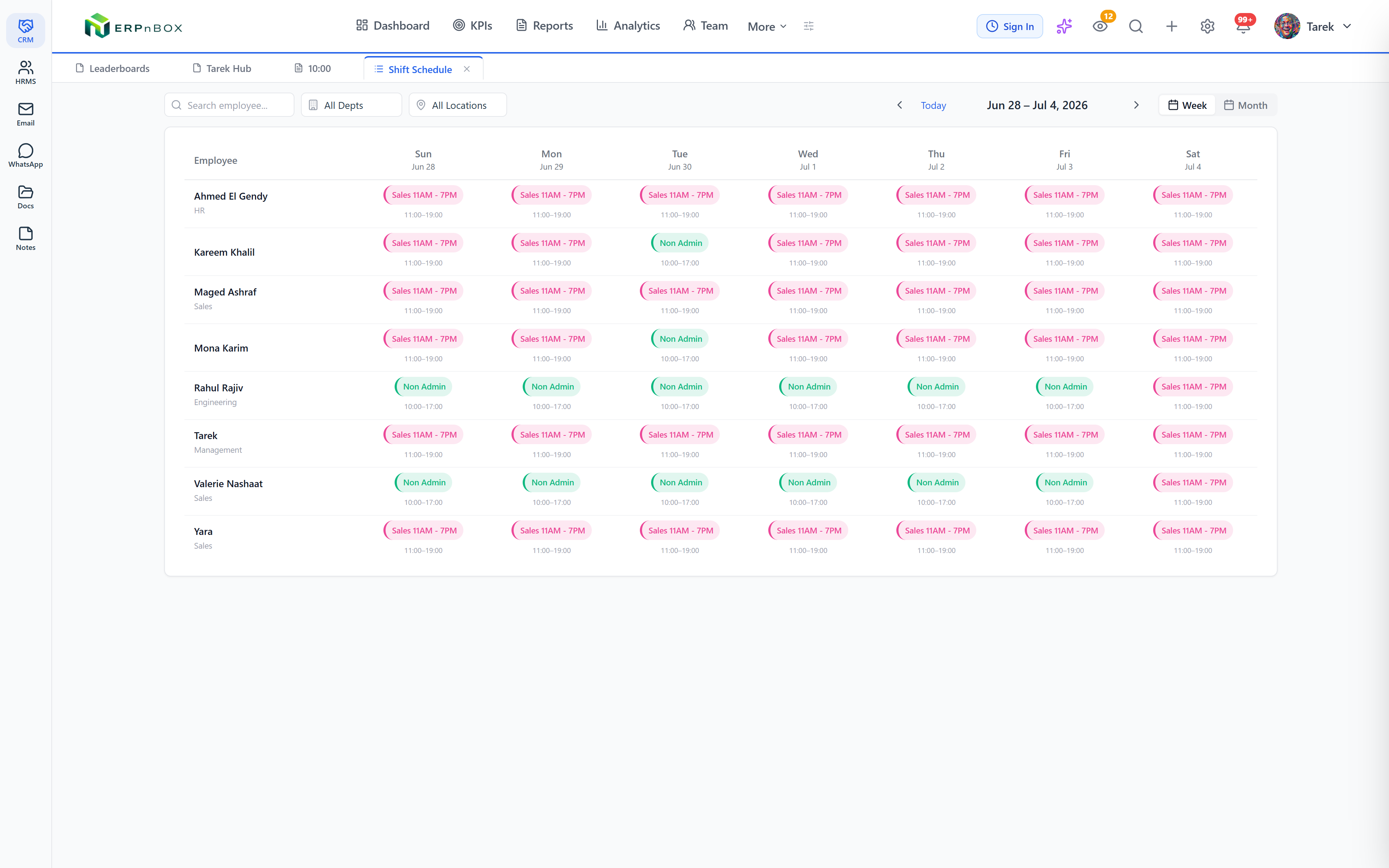
Define shifts with paid-hour margins and core hours, build rotating patterns, and track statutory weekends, then assign them per person. Everything downstream, attendance, overtime, and business-hours automation, measures against the right schedule.
- Paid-hour margins and core-hours windows
- Rotating shift patterns
- Statutory-weekend tracking per day
- Assign per employee, department, or location
Margins
Before and after boundaries for payable hours
Core hours
A required-presence window inside the shift
Rotating
Repeating multi-week patterns per team
Statutory
Weekends tracked separately for payroll
A shift is more than a start and end time
Each shift has from and to times, before and after margins that set the boundaries of payable hours, a core-hours window where presence is required, an eligible department, and an optional shift allowance. That structure is what lets attendance and overtime be measured precisely instead of estimated.
Weekends that payroll understands
Per-day weekend configuration marks a day as a weekend, a half day, or a statutory weekend, tracked separately so payroll treats work on those days correctly. Rotating patterns then repeat across weeks for teams whose schedule changes on a cycle.
01
Assign a schedule to every person
Build weekly shift patterns and assign them to people with effective dates, so attendance, overtime, and business-hours-aware automation all measure against the schedule that person actually works. Change the assignment and everything downstream follows.
Frequently asked questions
Can I set up rotating shifts?
Yes. You build a repeating shift pattern and assign it to a team, so the schedule rotates across weeks automatically.
How do shifts connect to payroll?
Shifts define paid-hour margins, core hours, and statutory weekends, and attendance measures against the assigned shift, so overtime and payable days feed payroll with the right numbers.
Run your team on ERPnBox
Describe your team and AI sets up your HR system. Start free, no credit card.